
Light E-Mobility and the Growing Role of RF Connectivity

Light electric vehicles (LEVs), including e-bikes and e-scooters, offer a convenient way to make short trips. As riders and fleet operators look for practical transportation options, LEV designers are adding connected features alongside electric propulsion. That creates new requirements for wireless communication within vehicles built around limited space and weight.
Connectivity Is Becoming Standard, Not Optional:
Many LEVs now include wireless modules for GPS/GNSS tracking, anti-theft functions, remote diagnostics and, in shared fleets, vehicle management. Antennas, RF connectors and cable assemblies form part of the path between these modules and the outside network. Their selection can affect signal performance, packaging and serviceability.
A compact vehicle also faces demanding physical conditions. Its electronics may be exposed to vibration, temperature changes, dust and moisture. Designers must consider where each RF connection sits: a connector protected inside a sealed enclosure has different requirements from a connection directly exposed to the environment. IP-rated or vibration-resistant configurations may be needed at particular locations, but those features must be verified for the specific product and installation.
The Rise of Fleet and Shared Systems:
Shared e-bike and scooter programs bring additional operating needs. Fleet managers may use connected systems to locate vehicles, monitor batteries, review usage information and identify maintenance needs. Timely data can help teams decide when to charge, repair or reposition a vehicle.
These functions depend on the complete communication system, including the radio, antenna, network service and RF signal path. A vehicle does not need to maintain an uninterrupted connection for every function; designers should determine how often each type of information must be transmitted and how the system responds when coverage is unavailable.
Wi-Fi, Bluetooth, LTE and 5G can serve different roles depending on the LEV design. Compact coaxial cable assemblies and board-level RF connectors help route signals through crowded electronics, while suitable antenna connections support communication outside the vehicle. For outdoor use, the overall enclosure and exposed connections must meet the required environmental conditions.
Amphenol RF Products for LEV Designs:
-
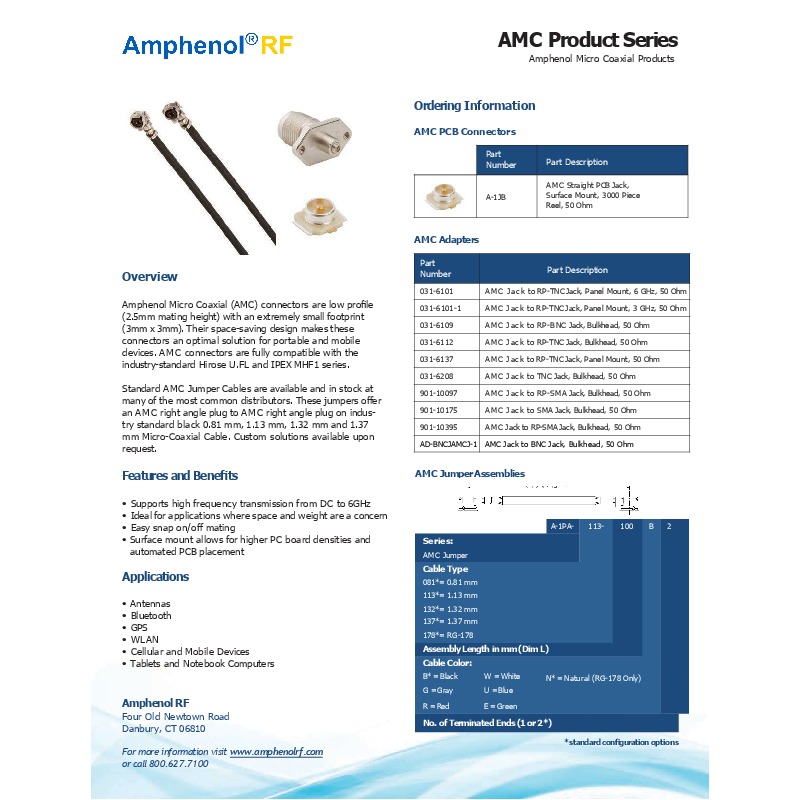
AMC provides a low-profile micro-coaxial interface for internal RF connections in space-constrained modules.
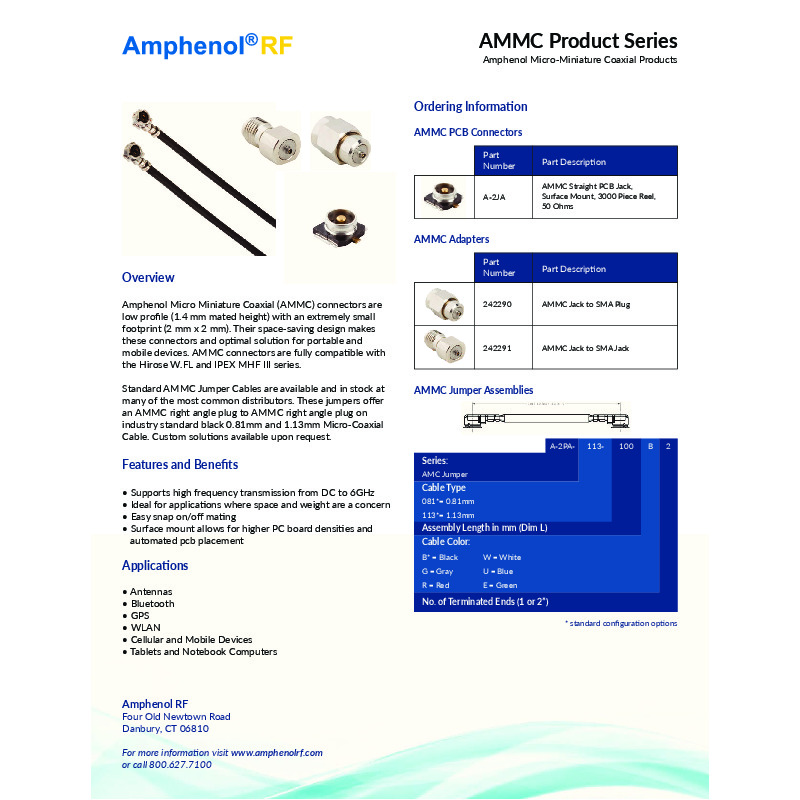
- AMMC offers a smaller footprint for densely populated boards and compact wireless devices.
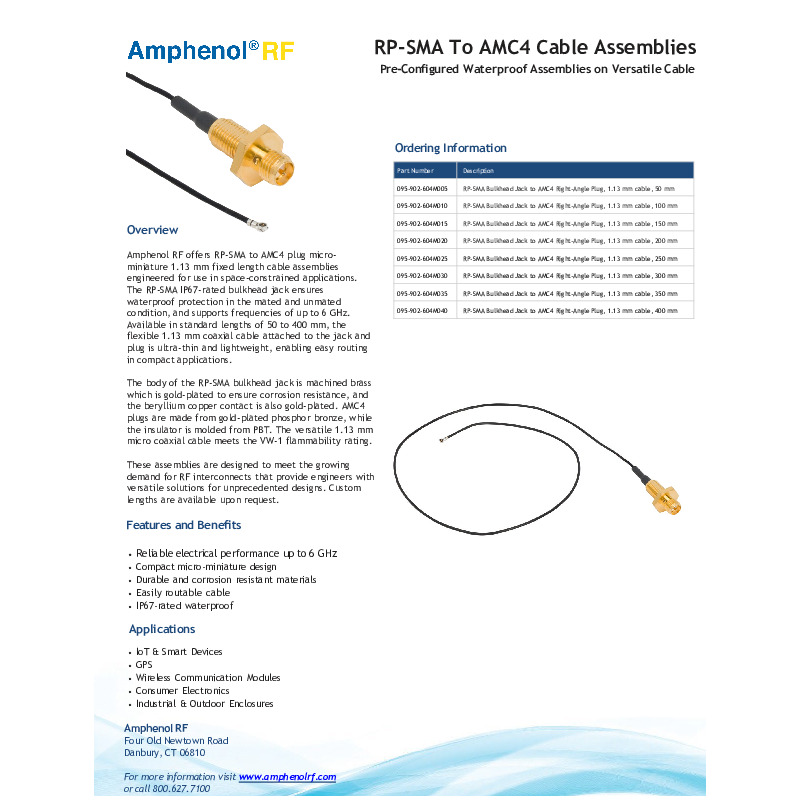
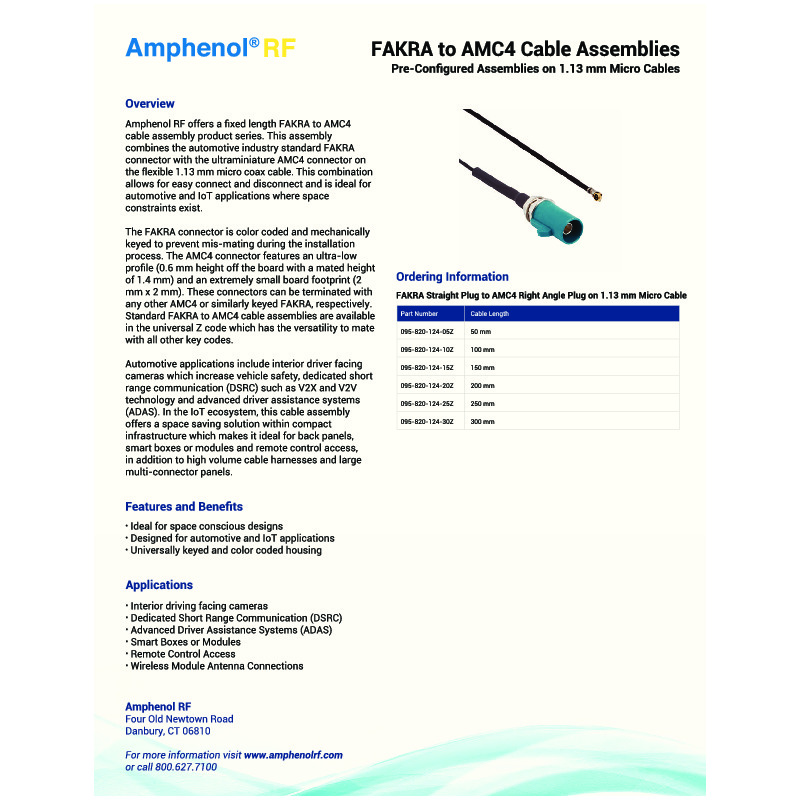
- AMC4 provides another ultraminiature option where board space is limited.
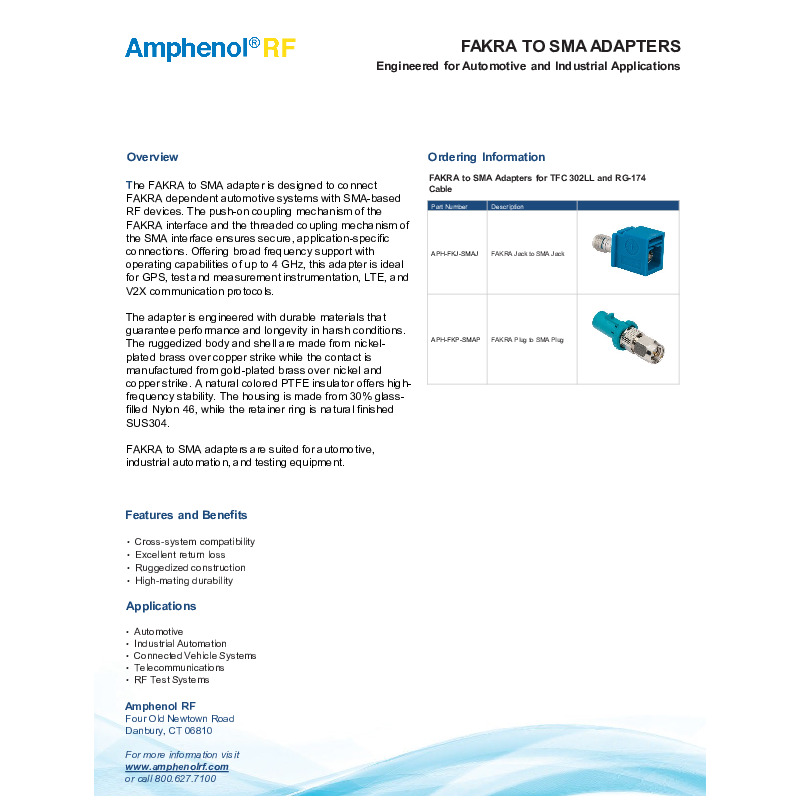
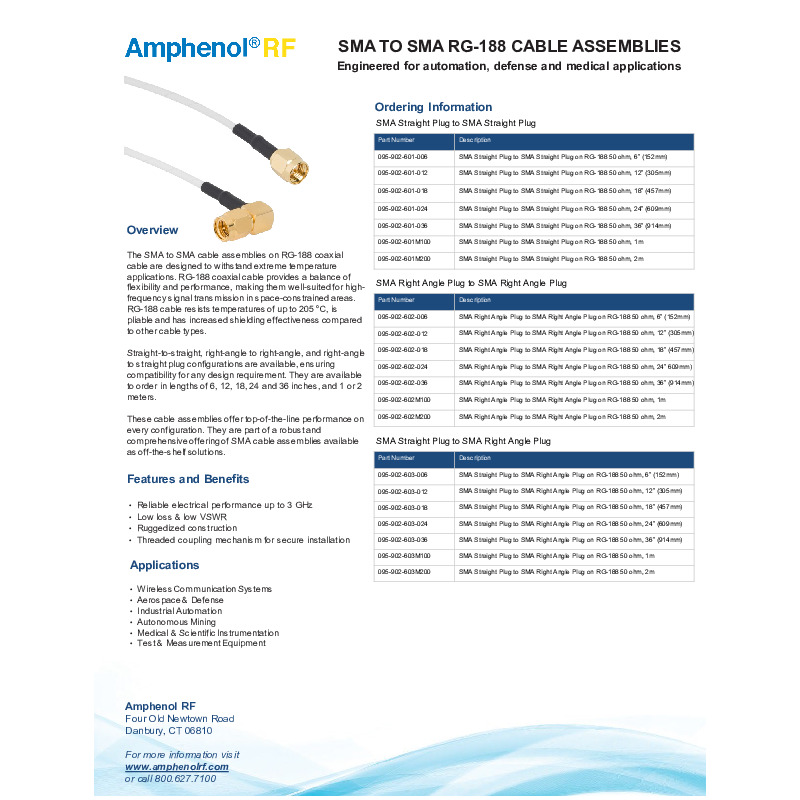
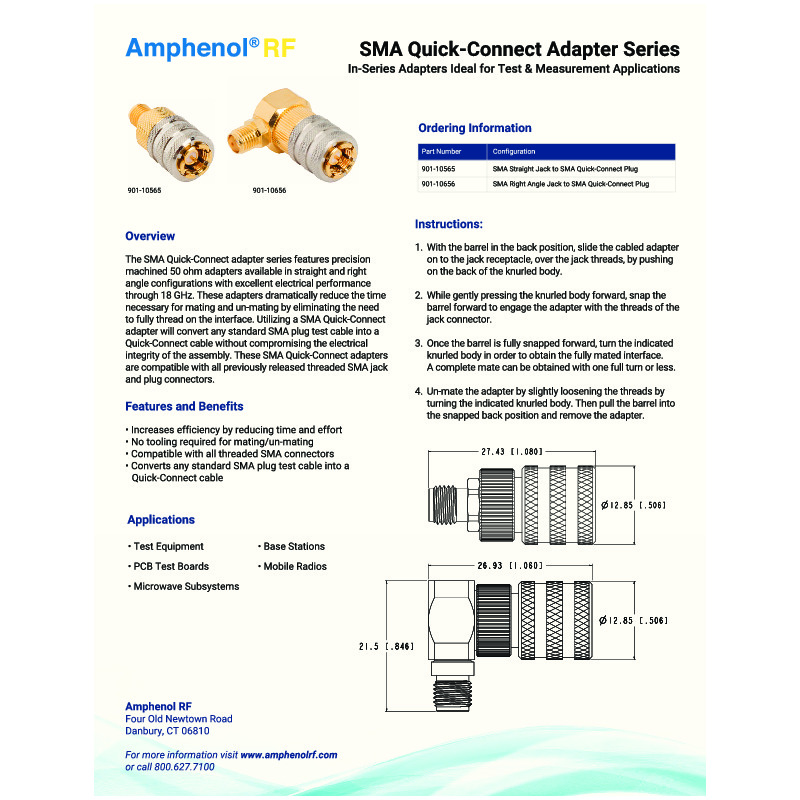
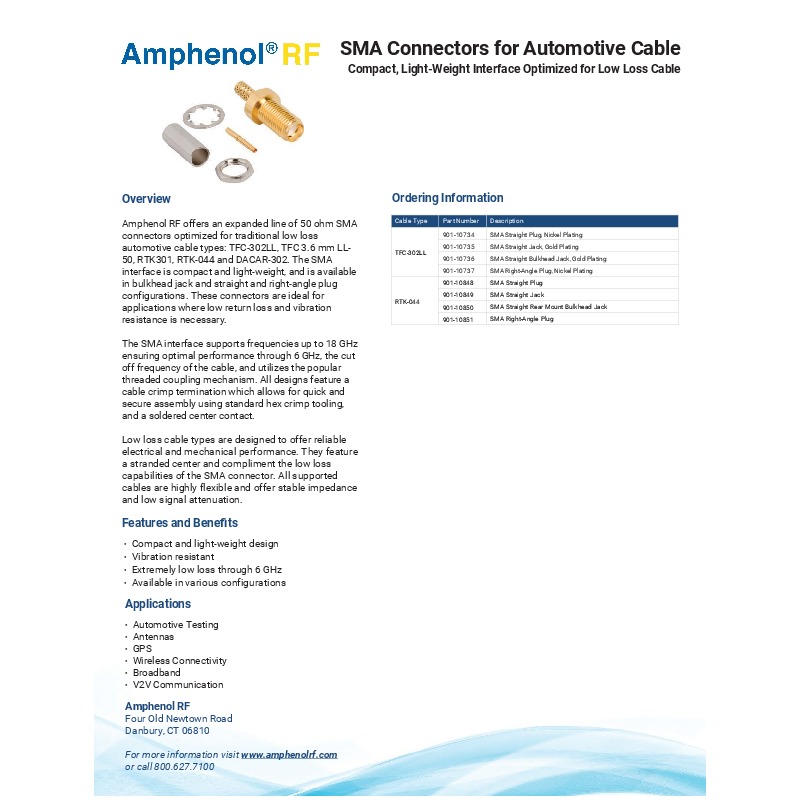
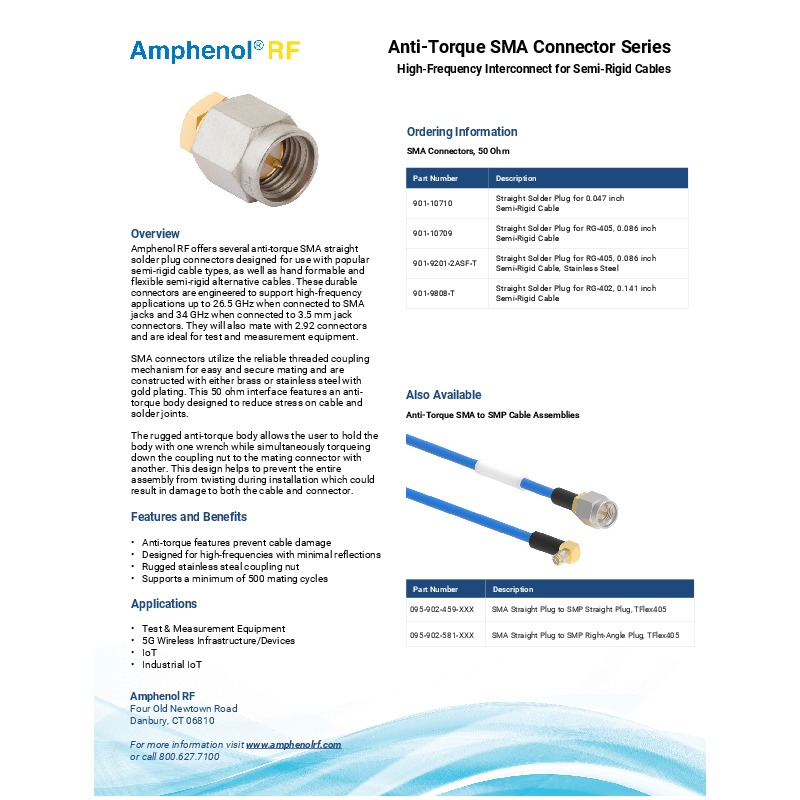
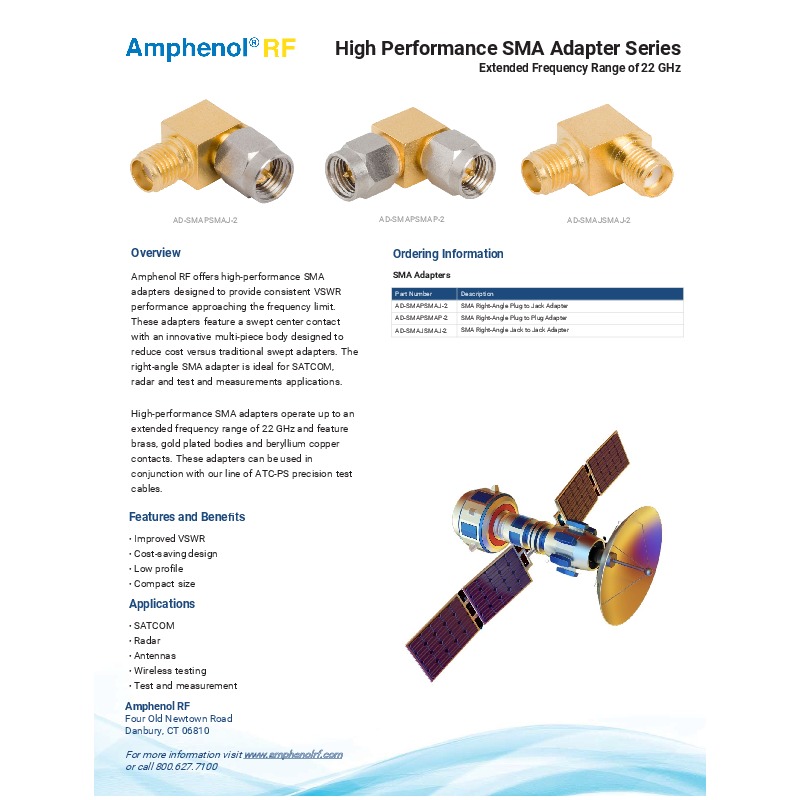
- SMA offers a threaded interface for applicable antenna and equipment connections.
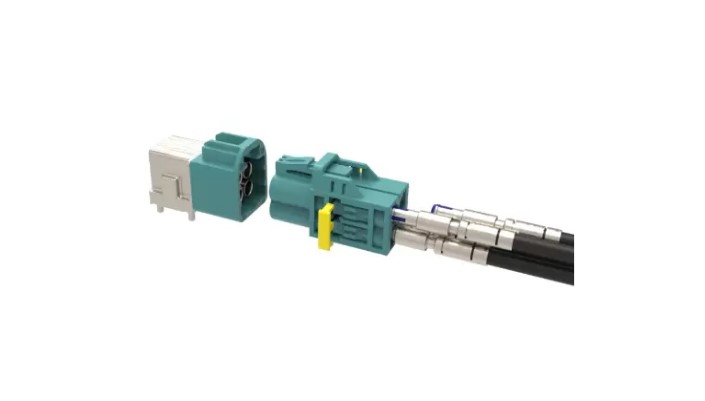
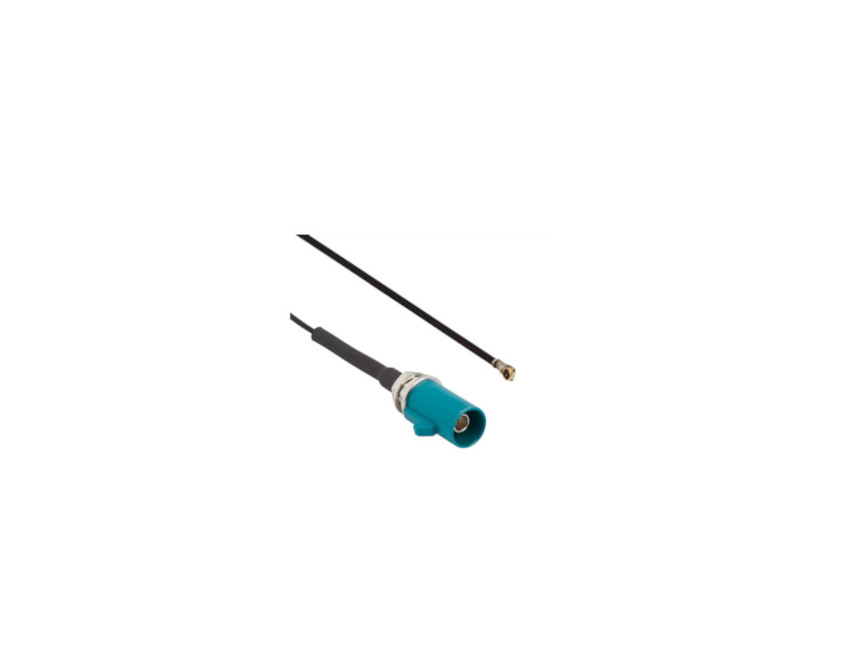
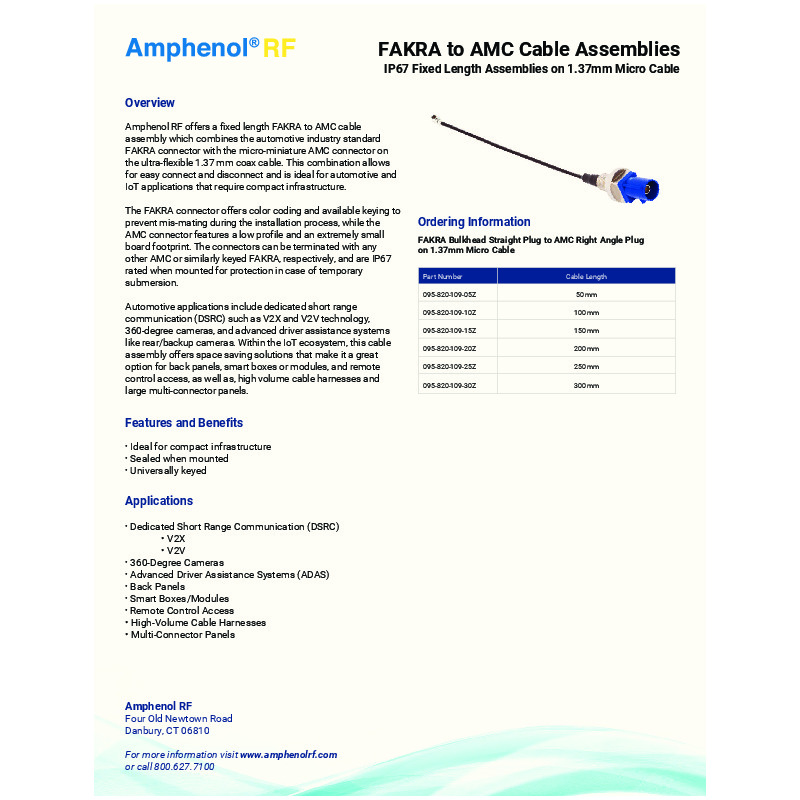
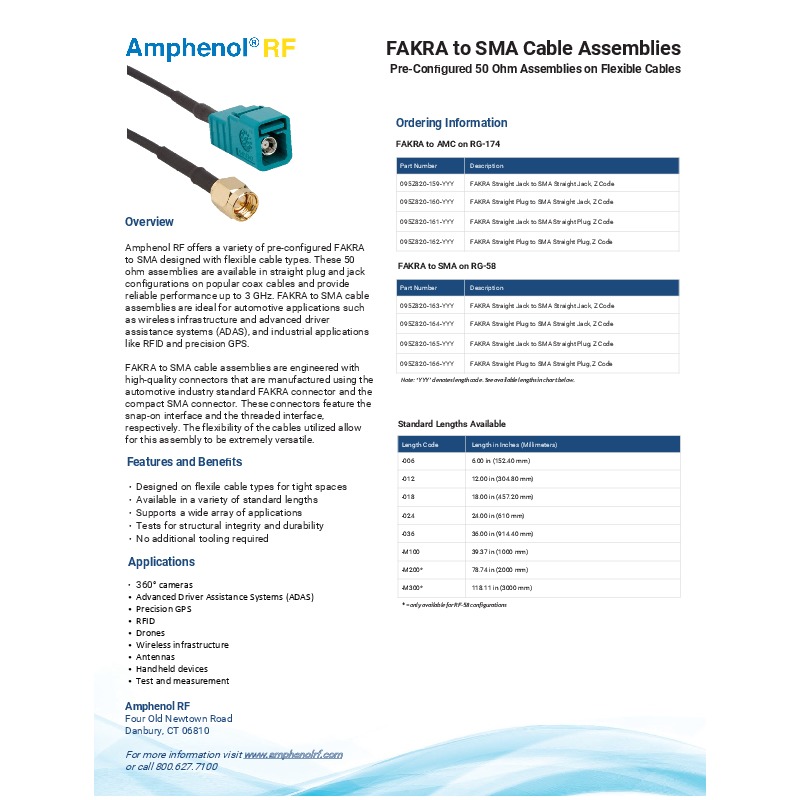
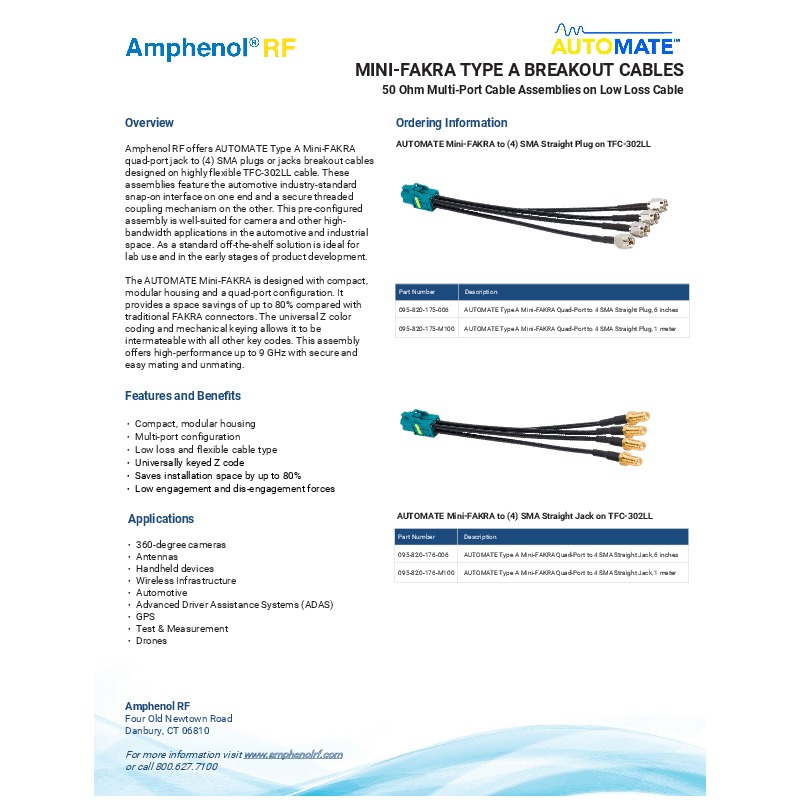
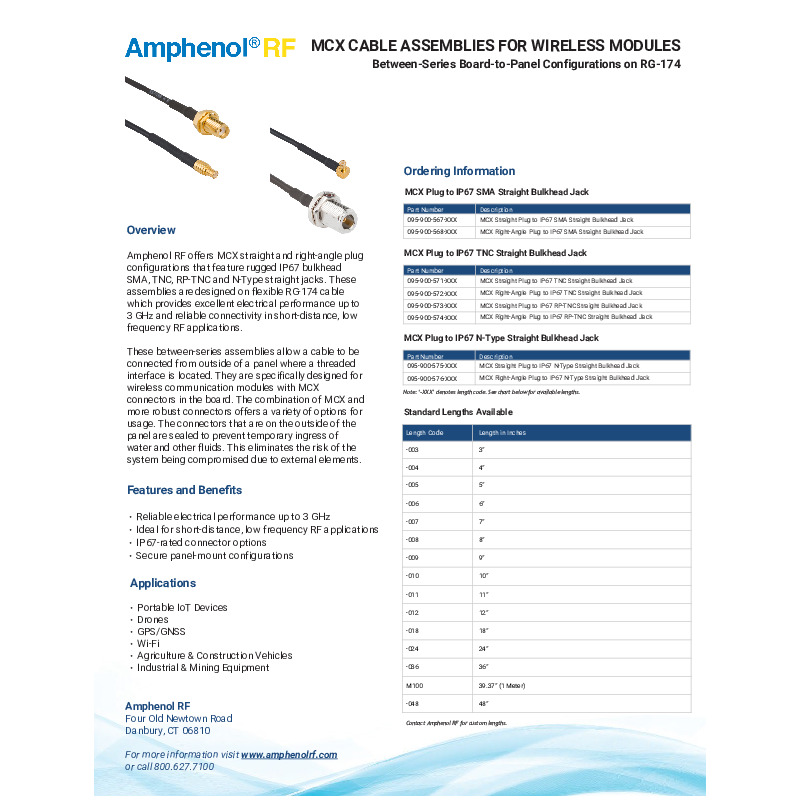
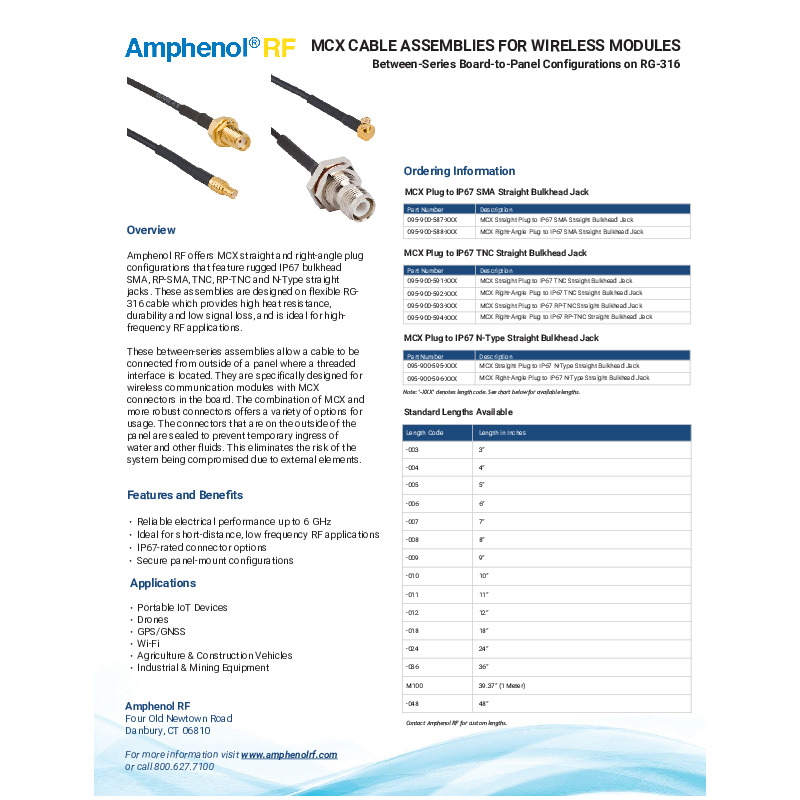
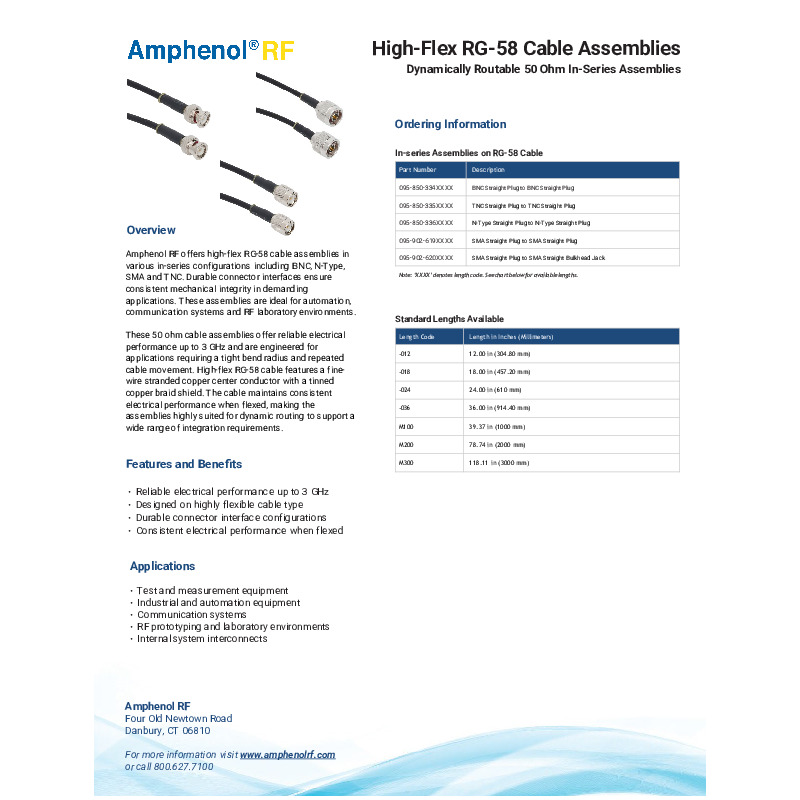
- RF cable assemblies connect interfaces across the vehicle and provide routing options for its physical layout.
AMC, AMMC and AMC4 differ in size and mating geometry, so the selected interface should match the board layout, cable and expected service conditions. Amphenol RF lists a 3 mm × 3 mm footprint for AMC and 2 mm × 2 mm footprints for AMMC and AMC4.
As LEVs gain more connected features, RF design becomes part of the vehicle’s overall electronics architecture. Selecting connectors, cable assemblies and antennas for the actual wireless bands, available space and operating environment helps manufacturers build dependable connected features into compact vehicles.
Ressources connexes


















Envoyez-nous un message
Veuillez remplir le formulaire ci-dessous ; nous vous contacterons très prochainement.
Les champs marqués d'un astérisque (*) sont obligatoires.