
RF Interconnect Design for Smart Home Applications: 8 Trends Engineers Need To Know

RF interconnects are part of the wireless signal path, not simply a mechanical connection. In a smart home device, the connector and cable assembly can influence signal integrity, antenna placement, mechanical reliability, environmental protection and how efficiently limited PCB space is used. As products add more radios, higher data rates, smaller enclosures and more demanding operating environments, engineers need to evaluate the RF interconnect as part of the complete antenna-to-radio architecture.
Why smart home RF design is getting harder
The smart home is evolving from a collection of connected products into a more integrated wireless ecosystem. Security cameras, video doorbells, smart locks, thermostats, lighting controls, appliances, energy-management equipment and robotic devices all depend on wireless communication.
For engineers, adding wireless connectivity involves more than selecting a radio module. Antenna placement, impedance, signal integrity, electromagnetic interference, mechanical packaging, environmental exposure and long-term reliability all affect the final design. The result is a broader engineering question: how should the RF signal get from the radio to the antenna while preserving electrical and mechanical performance?
8 smart home trends shaping RF interconnect design
1. Smart home security is increasing RF performance and environmental demands
Connected cameras, video doorbells, smart locks, motion sensors and access-control devices are becoming core elements of residential security systems. Cameras and doorbells can require reliable wireless links for high-resolution video, while outdoor products may face moisture, temperature variation and mechanical exposure. Smart locks and sensors add another constraint: compact packaging.
Engineering consideration: The RF architecture has to balance wireless performance, mechanical retention, enclosure constraints and environmental requirements.
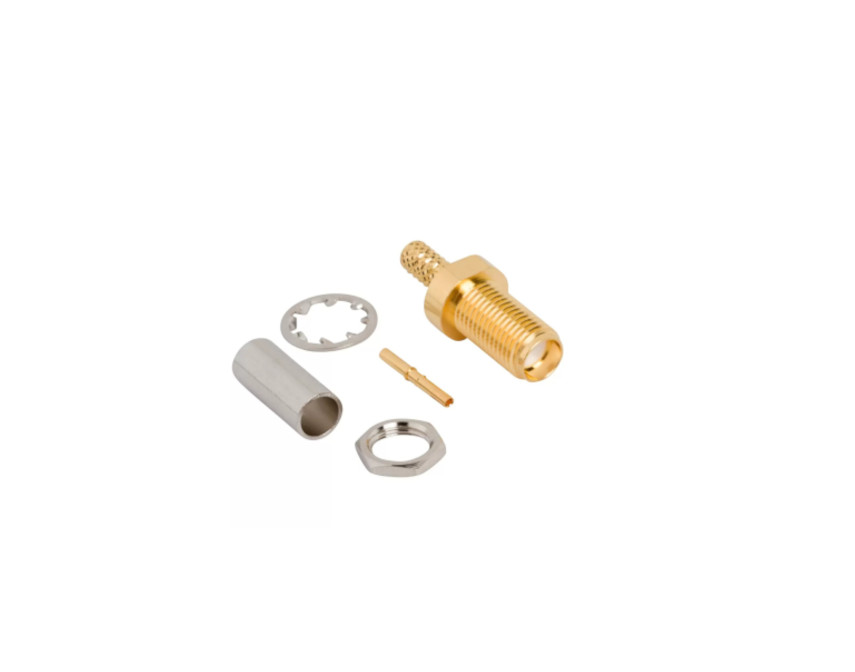
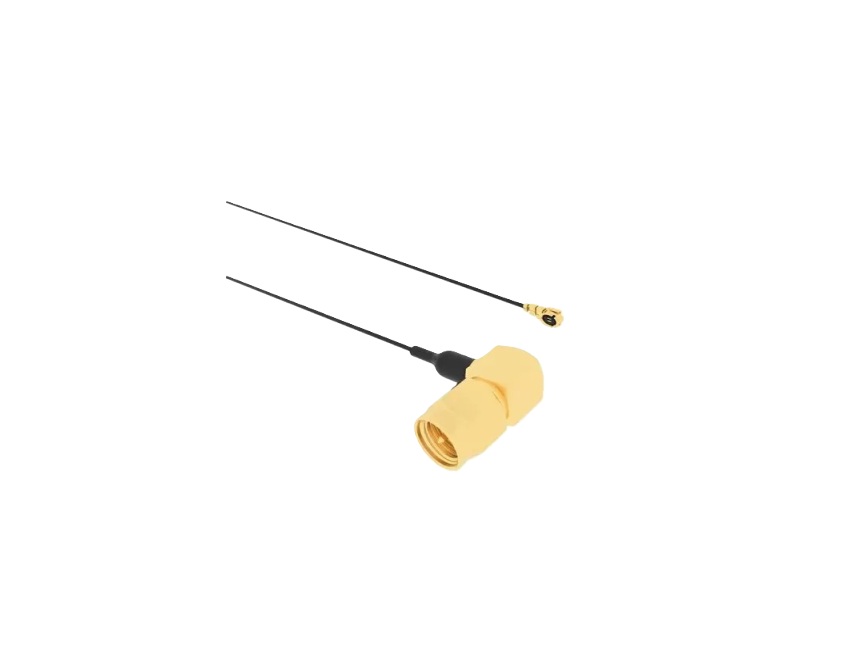
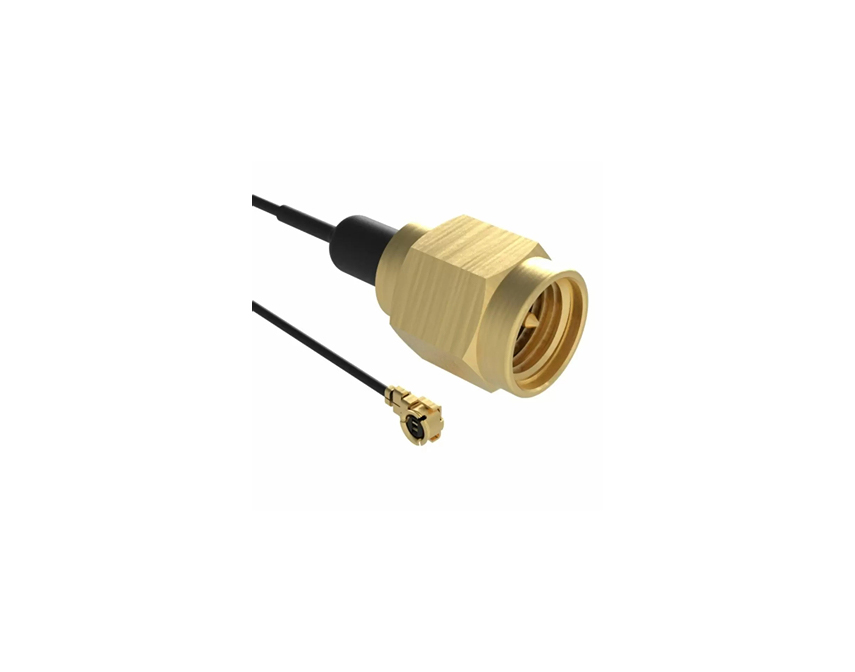
Design takeaway: For internal antenna-to-radio connections, compact micro-coaxial interfaces can help route RF through tight enclosures. For external antennas, threaded interfaces such as SMA or RP-SMA can provide secure mechanical coupling. Where exposure is a concern, the connector, cable assembly and enclosure should be evaluated as one environmental system.
2. Multi-protocol smart homes are increasing antenna and RF-path complexity
Modern smart home products may combine Wi-Fi, Bluetooth, Thread, Zigbee and other wireless technologies. Matter is also increasing the emphasis on interoperability across connected-home ecosystems. A hub or gateway can therefore contain multiple radios and antennas that must coexist within a limited enclosure.
Engineering consideration: More radios can mean more antennas, more RF paths and more opportunities for coupling or interference. Antenna location and cable routing become system-level decisions rather than late mechanical details.
Design takeaway: Coaxial RF connections can give engineers flexibility to move antennas away from crowded PCB regions or sensitive electronics. The connector family should be selected for the required frequency range, impedance, package height, cable routing and mating method.
3. Higher wireless bandwidth makes signal integrity more important
Security video, smart displays, connected appliances and other data-intensive products continue to place greater demands on wireless links. As frequency and bandwidth increase, losses, impedance discontinuities, connector geometry and cable characteristics become increasingly important.
Engineering consideration: An RF interconnect that performs adequately at one frequency may not deliver the same result as system bandwidth increases. The connector cannot be evaluated independently from the cable, PCB launch, antenna and enclosure.
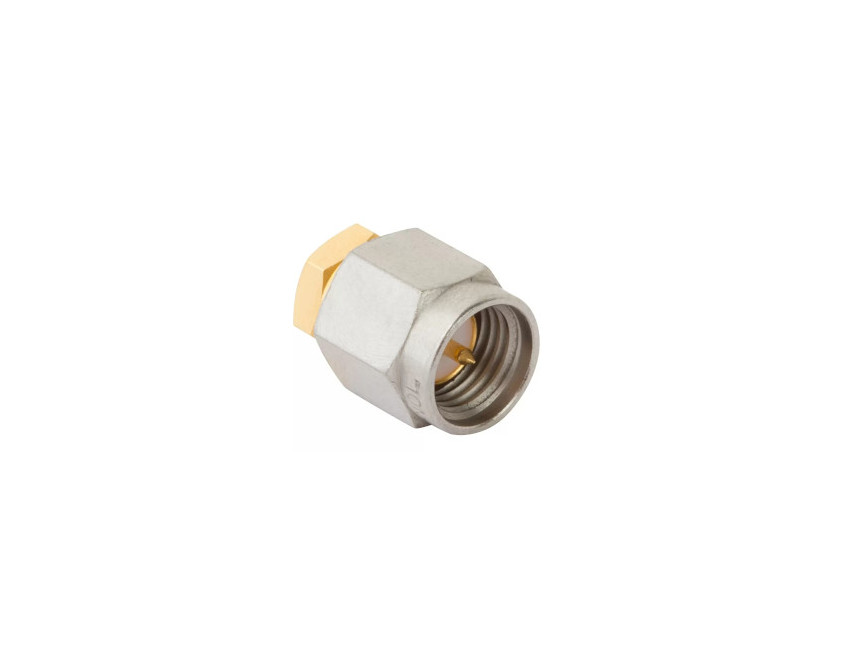
Design takeaway: Evaluate the complete RF path. Amphenol RF's current portfolio includes 50 ohm SMA solutions with standard performance to 18 GHz and extended-range configurations to 34 GHz; actual performance depends on the specific connector, cable and assembly configuration.
4. Low-power IoT networks are pushing RF connectivity into smaller devices
Battery-powered door and window sensors, environmental monitors, and other IoT nodes often prioritize low power, long battery life, and reliable communication over high throughput. Technologies such as Thread can support larger networks of connected devices without requiring every node to use a high-bandwidth Wi-Fi connection.
Engineering consideration: Battery-powered products typically have tight space, power and material budgets. The RF interconnect must fit the enclosure without adding unnecessary loss, mass or routing complexity.
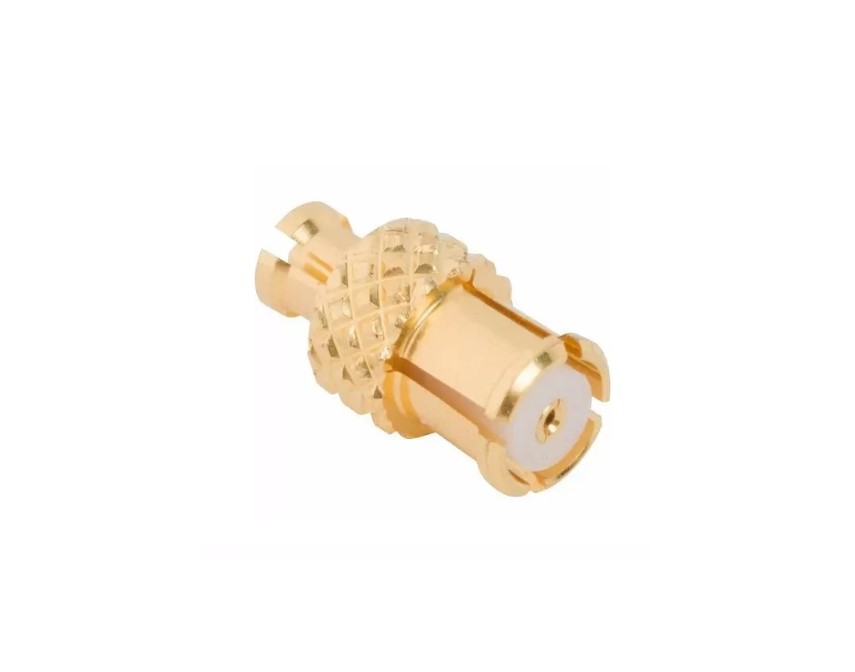
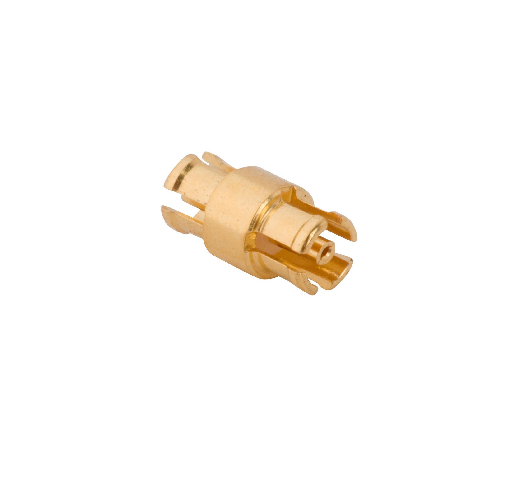
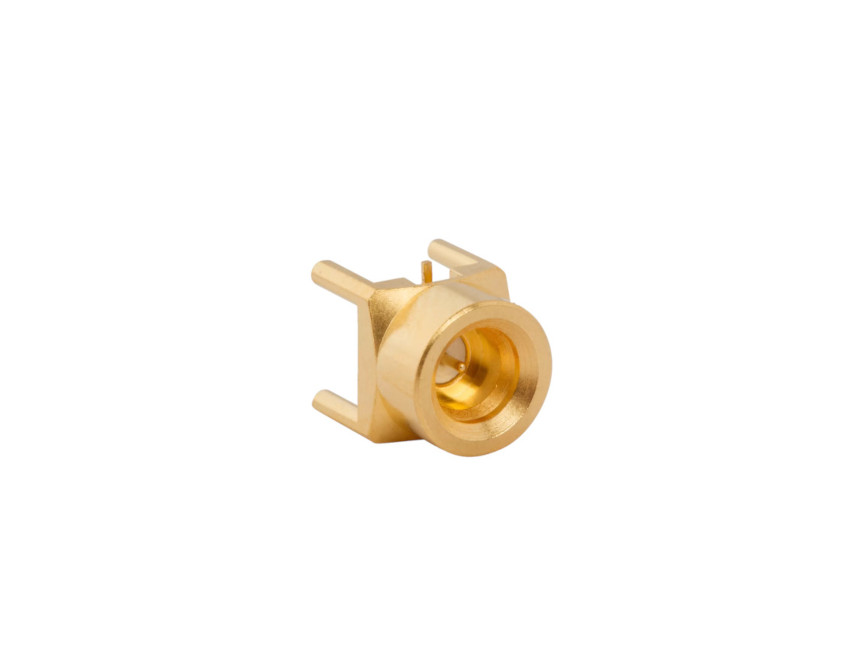
Design takeaway: Miniature micro-coaxial connectors can preserve PCB real estate while maintaining a controlled 50 ohm RF connection. Amphenol RF's AMC and AMC4 families are positioned for compact wireless and embedded applications, with current product information indicating performance up to 6 GHz on the core families and select configurations supporting Wi-Fi 7 frequencies.
5. Home electrification is expanding wireless connectivity into larger and harsher environments
Heat pumps, EV chargers, solar energy systems, battery storage, smart meters, and connected appliances are bringing wireless connectivity to garages, basements, utility areas, and outdoor installations.
Engineering consideration: Larger enclosures, metal structures, greater antenna-to-radio distances and environmental exposure can complicate RF architecture. Antenna placement may need to be separated from the main electronics to improve the wireless link.
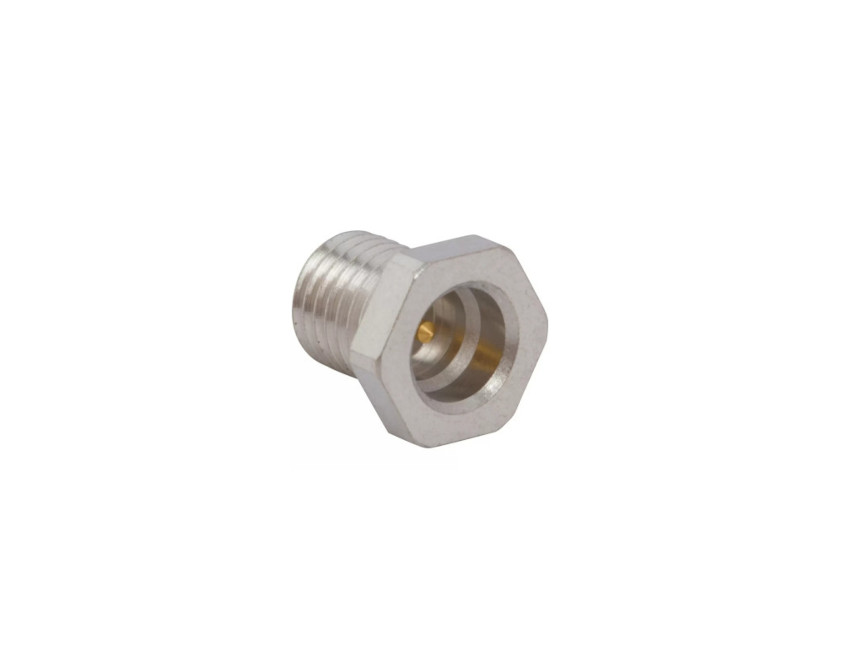
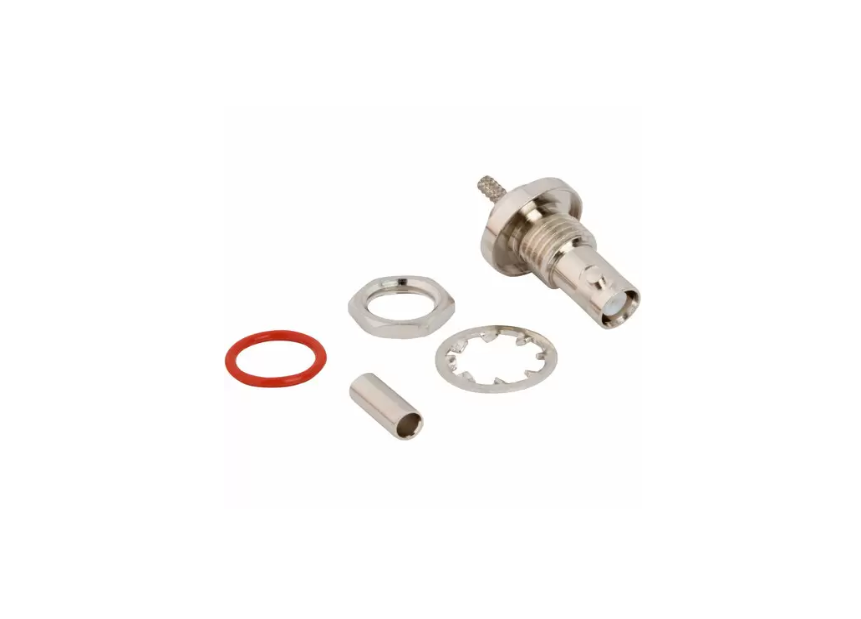
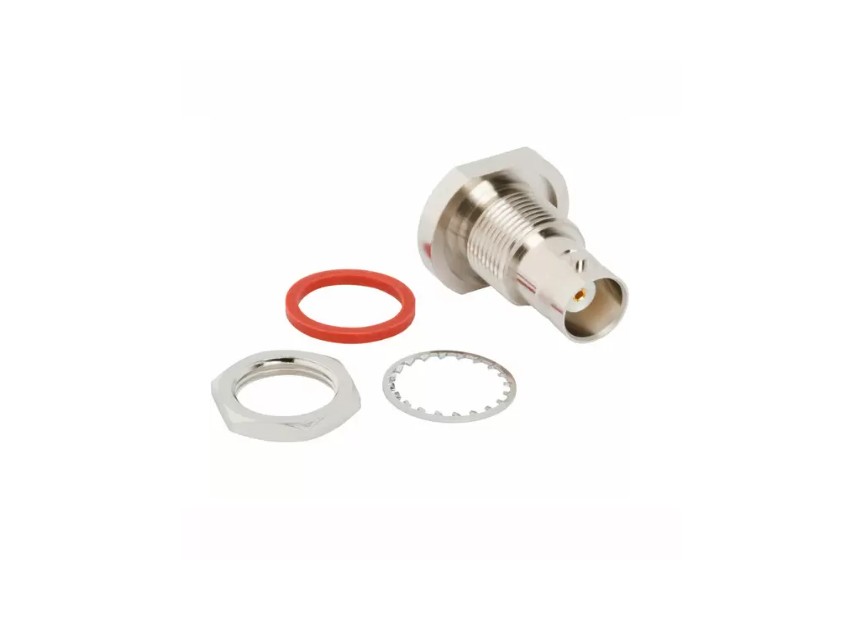
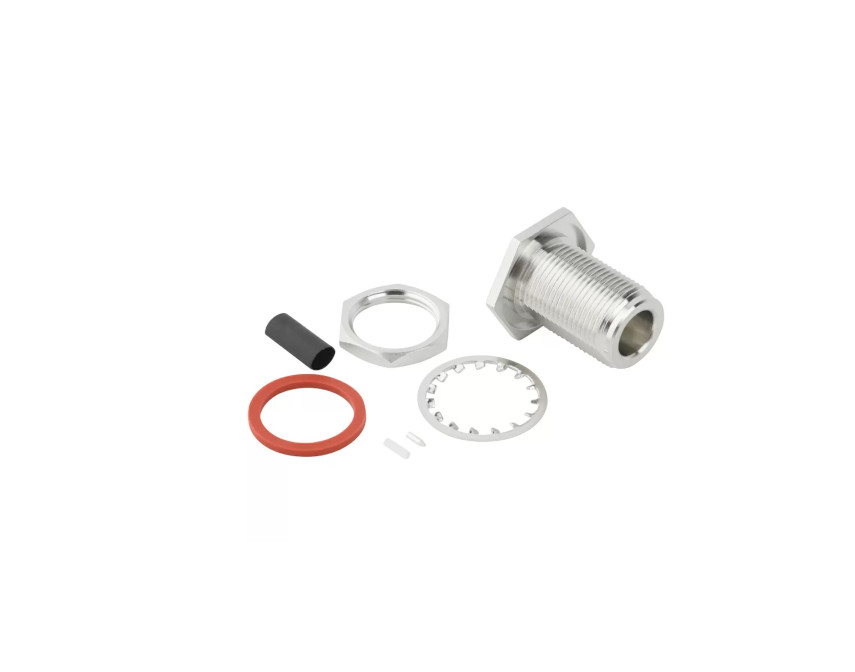
Design takeaway: Select the interconnect around both the RF requirements and the installation environment. Threaded interfaces such as SMA and N-Type can be appropriate where mechanical stability and environmental durability are important; the connector, cable and sealing strategy should be considered together. Amphenol RF's N-Type portfolio includes weatherproof configurations and extended-range options.
6. Smart home miniaturization is turning RF packaging into a system-design issue
A single smart home product may combine multiple radios, processors, sensors and antennas in an enclosure designed to be unobtrusive. More functionality in less space creates direct competition for PCB area and cable-routing paths.
Engineering consideration: Reducing connector size is not enough. The RF interface also has to support the required impedance, cable bend radius, assembly process, mechanical retention and antenna location.
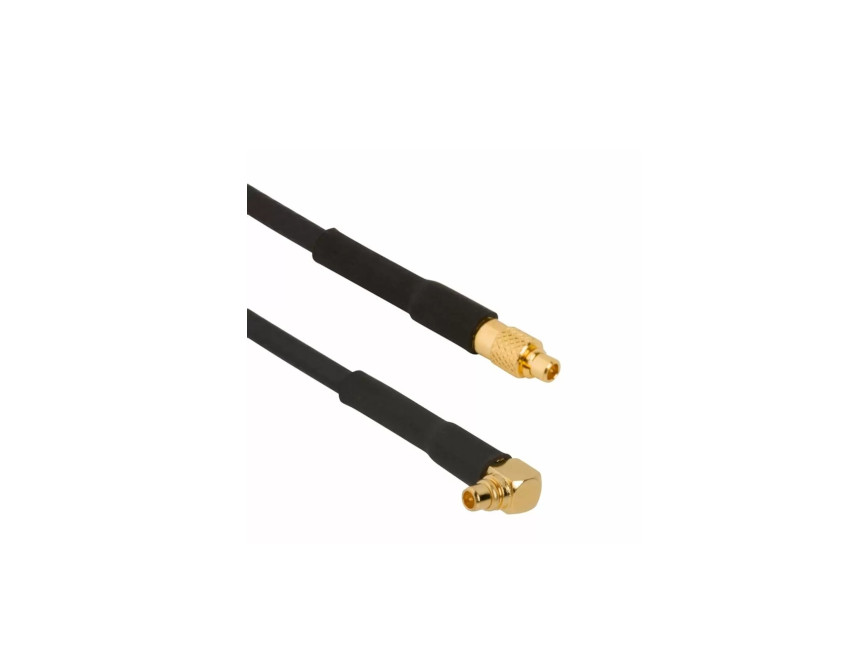
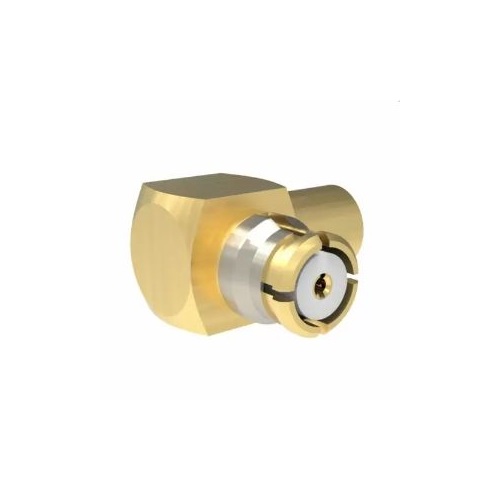
Design takeaway: Bring RF interconnect selection into the mechanical and PCB design conversation early. AMC, AMC4 and AMMC configurations can address different board orientations and cable-routing constraints, helping engineers work within compact layouts.
7. Dense wireless environments are raising the value of predictable RF paths
A modern home can contain multiple access points, smart speakers, security products, lighting controls, appliances, smartphones and IoT sensors operating in the same physical environment. Connectivity can be affected by interference, antenna placement, cable routing and losses in the RF path.
Engineering consideration: A high-performance radio cannot compensate for avoidable losses or impedance discontinuities elsewhere in the signal chain. Mechanical movement and inconsistent connections can add another source of variability.
Design takeaway: Treat connector quality, cable selection, grounding, shielding, antenna placement and mechanical retention as one RF architecture. A controlled-impedance interconnect is one part of that system, not a substitute for sound antenna and PCB design.
8. Smart home robotics adds vibration and motion to the RF design problem
Robot vacuums, lawn-care robots, security robots and other autonomous products depend on wireless connectivity for navigation, software updates, cloud communication and interaction with other smart home systems. Unlike stationary products, mobile devices introduce vibration, repeated movement and cable-routing challenges.
Engineering consideration: The RF path must remain electrically and mechanically stable while accommodating cameras, sensors, radios, processors and batteries inside a moving platform.
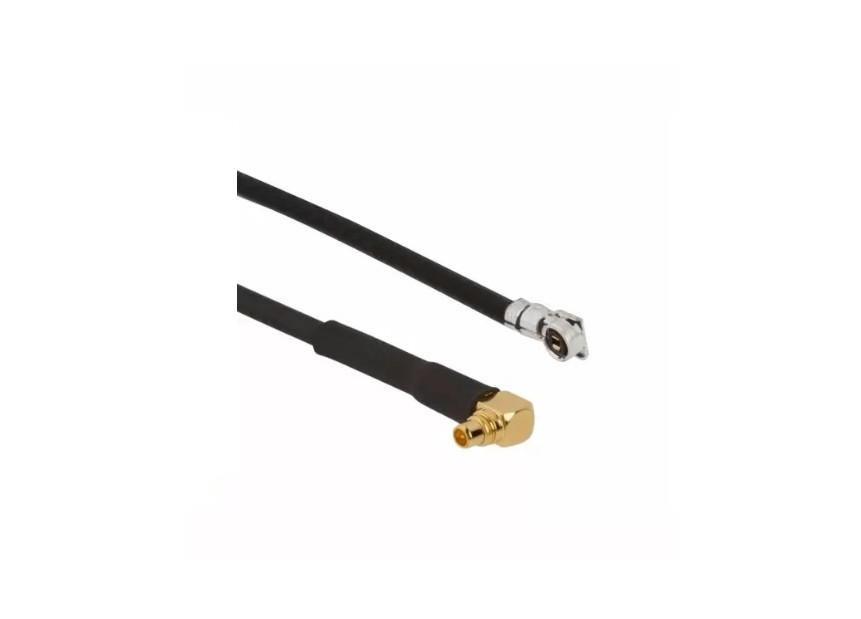
Design takeaway: Evaluate cable routing, strain relief, connector retention and vibration alongside electrical performance. Micro-coaxial connections can support compact internal architectures, while secure coupling mechanisms can be considered where additional mechanical retention is needed.

How to choose an RF interconnect for a smart home device
The right RF connector is application-dependent. Engineers should define the system requirements before selecting an interface.
- Frequency and bandwidth: Confirm the operating band and the performance of the complete connector-and-cable assembly at the required frequencies.
- Impedance: Most wireless RF paths use 50-ohm interfaces. Maintain impedance continuity through the connector, PCB launch, cable and antenna.
- Antenna location: Determine whether the antenna should remain on the PCB or be moved within the enclosure using a coaxial cable assembly.
- Available space: Compare connector footprint, mated height, cable bend requirements and routing direction against the mechanical envelope.
- Mechanical retention: Choose between snap-on, push-on, threaded and other coupling approaches based on vibration, serviceability and assembly requirements.
- Environment: For outdoor or exposed equipment, evaluate sealing, temperature, corrosion and material compatibility across the full RF assembly.
- EMI and isolation: For multi-radio designs, consider antenna separation, shielding, grounding and RF-path routing to reduce unwanted coupling.
- Manufacturing: Account for assembly tooling, cable termination, mating consistency, inspection and test requirements before locking the interface.
What differentiates a strong RF interconnect strategy?
For smart home engineering teams, differentiation is less about choosing the smallest connector or the highest headline frequency and more about building a predictable, manufacturable RF path. A strong strategy connects electrical performance with mechanical packaging, environmental requirements, cable routing and antenna placement.
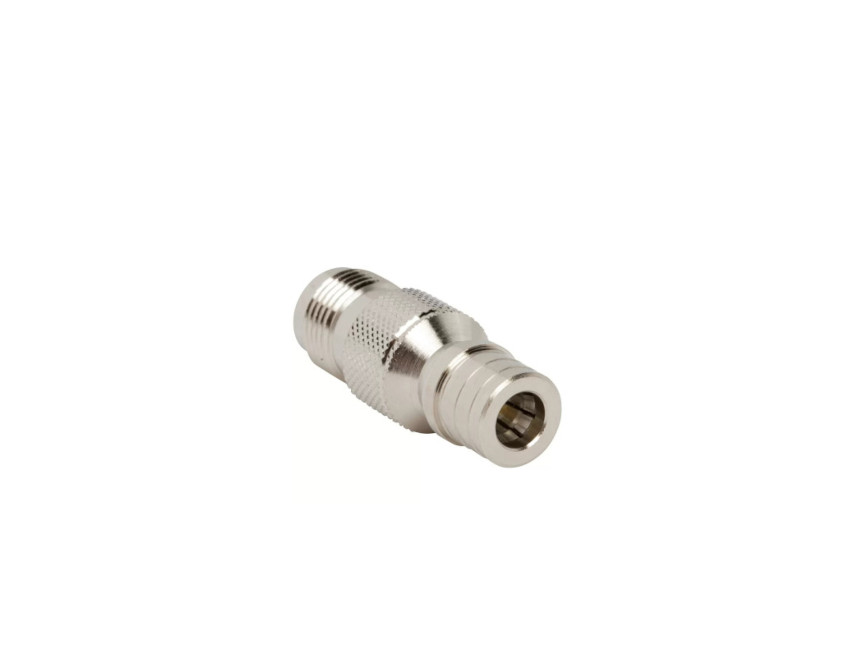
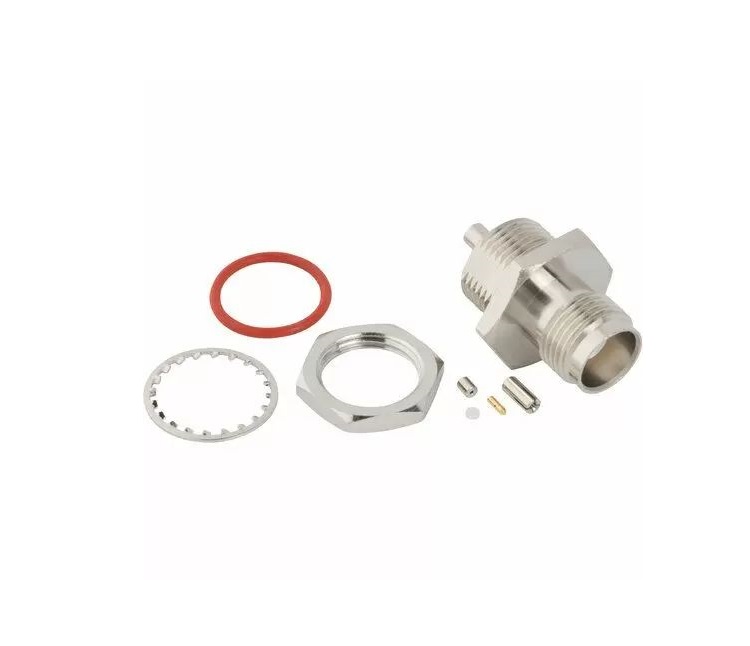
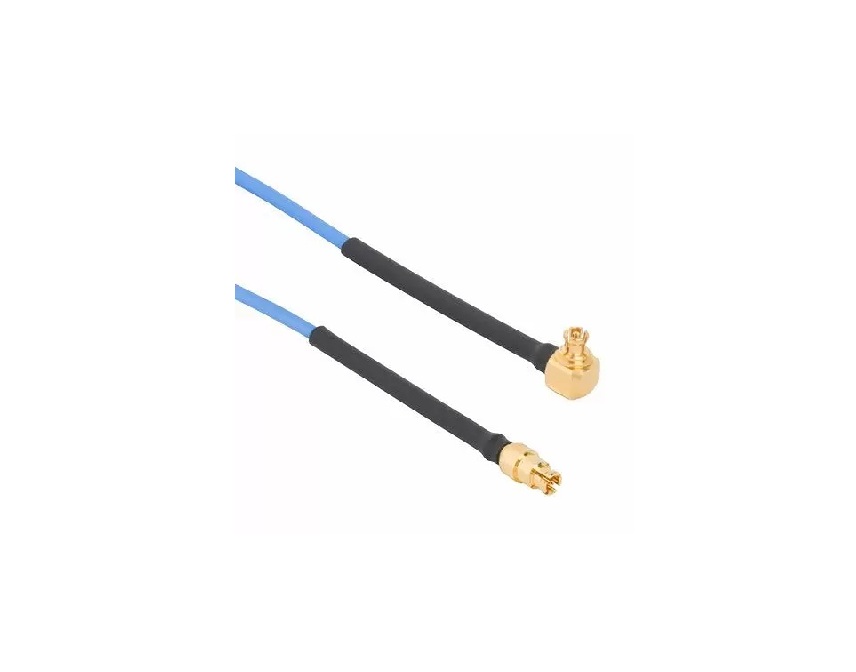
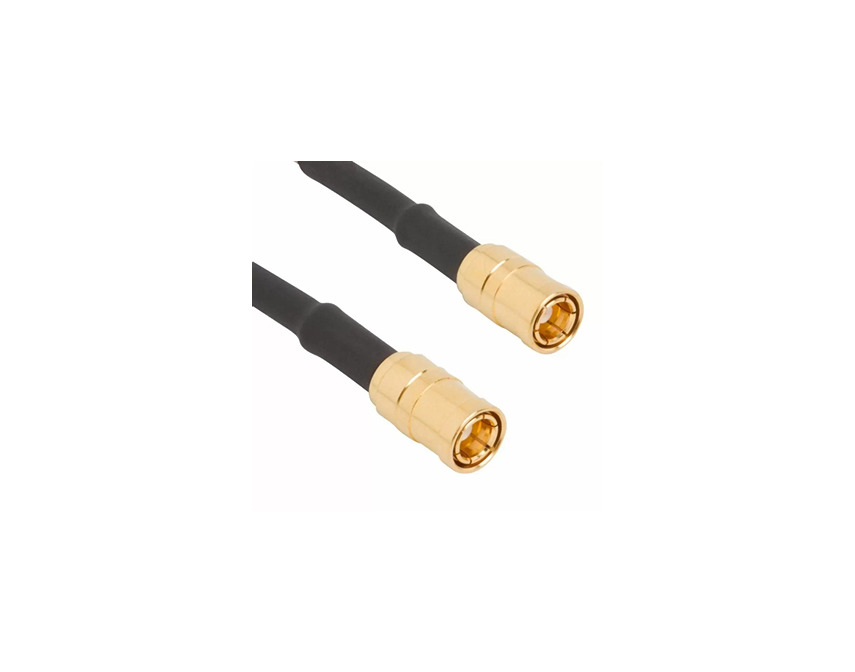
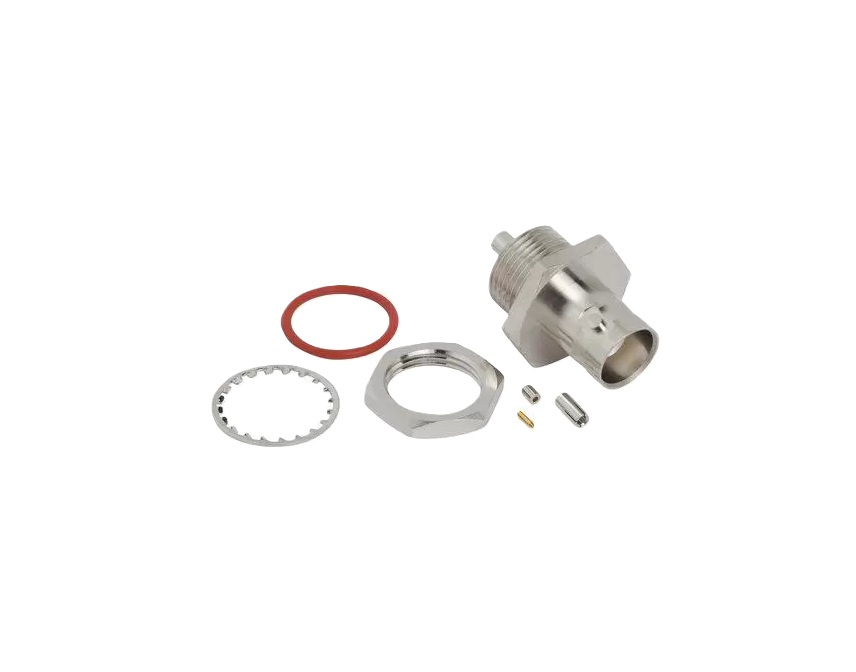
Amphenol RF's portfolio spans miniature micro-coaxial interfaces for embedded wireless designs, as well as SMA, RP-SMA, N-Type and cable-assembly options for applications that require different mechanical, environmental or external-antenna architectures. The practical value of a broad RF interconnect portfolio is the ability to match the interface to the architecture rather than forcing every smart home design into the same connector approach. Current Amphenol RF product information supports these application categories and emphasizes controlled impedance, compact packaging and secure coupling across relevant families.
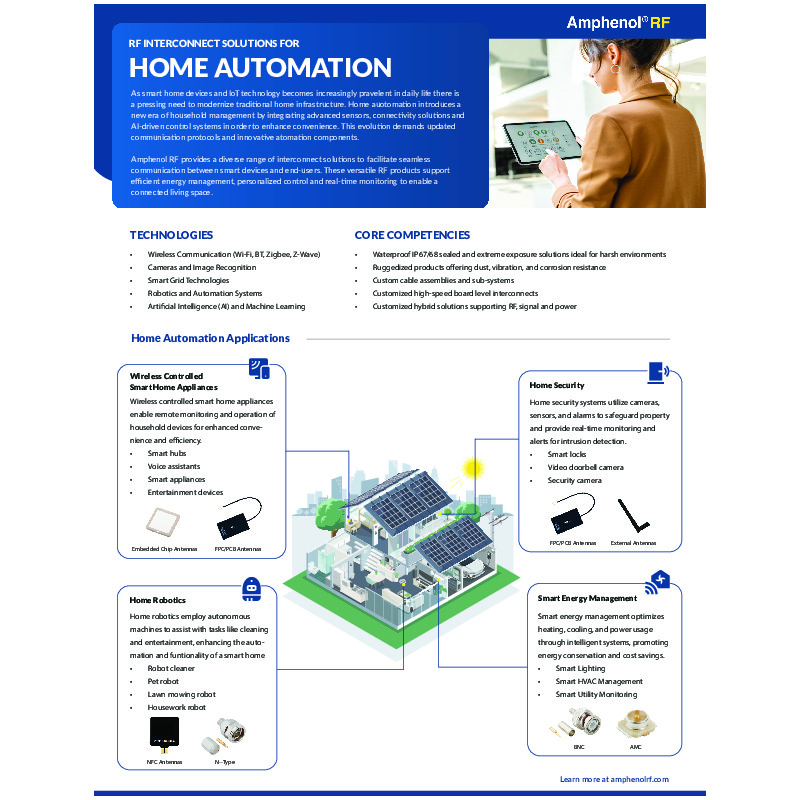
Learn more: Smart Home Automation Solutions
相关资源







.jpg)
给我们留言
请填写下表,我们将尽快与您联系。
标有星号 (*) 的字段为必填字段。