
Plating and Surface Finishing
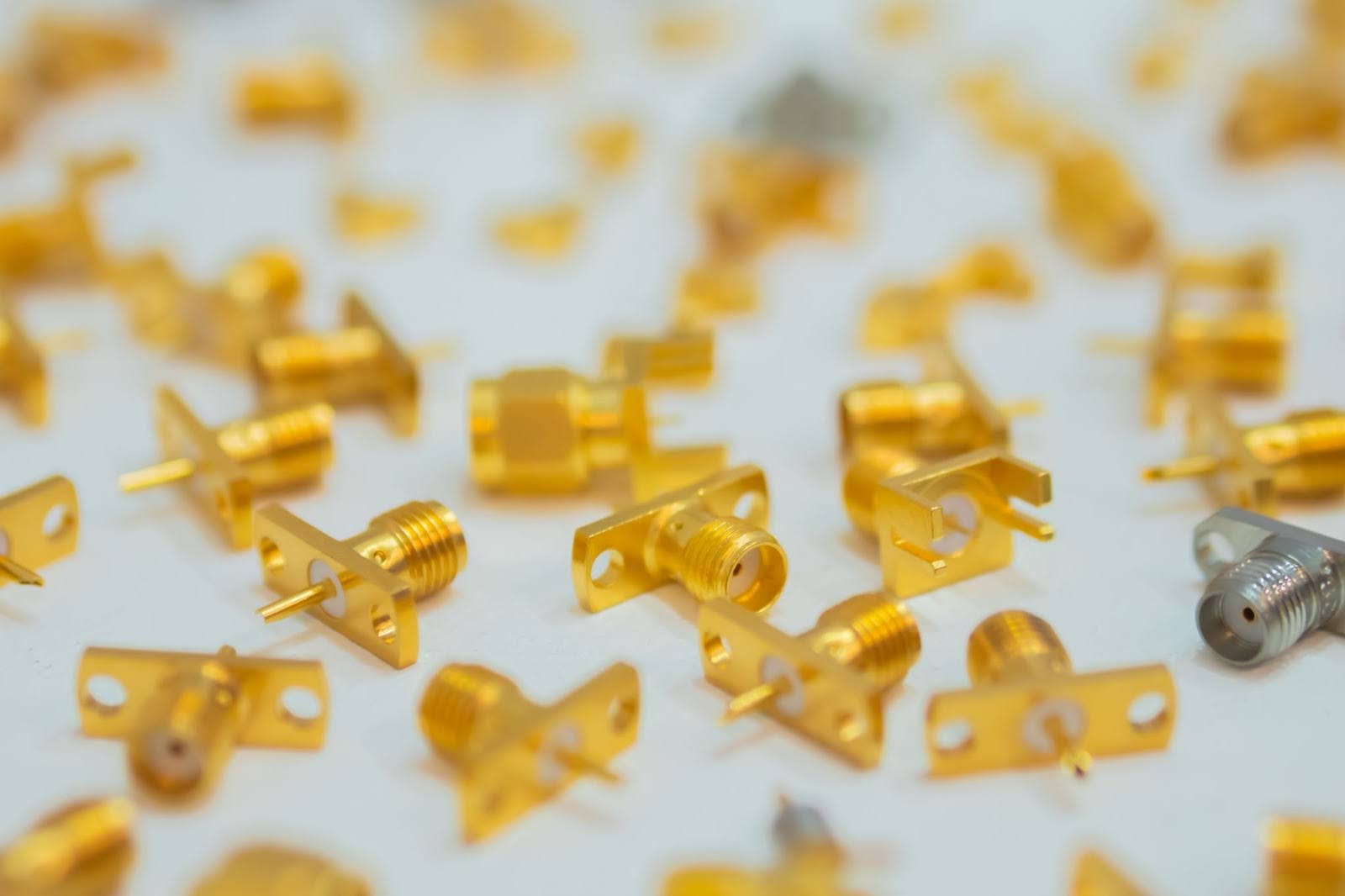
Plating and surface finishing in RF interconnect manufacturing are essential for optimizing electrical conductivity, mechanical robustness and environmental durability. Gold, silver and nickel are commonly used to reduce contact resistance, prevent corrosion and ensure reliable signal transmission across a connector's lifespan. These finishes are carefully selected and applied based on frequency range, mating cycles and the operating environment of the RF system.

Why Plating & Finishing Matter in RF Interconnects
RF signals are very sensitive to:
- Surface conductivity
- Contact resistance
- Signal reflection
- Oxidation or corrosion
Plating and surface finishes address these by enhancing electrical conductivity, maintaining signal integrity and extending product lifespan, especially in harsh or high-frequency environments.
Where Plating Is Used in RF Interconnects
- Center Contacts (Pins and Sockets)
- Usually gold-plated over a base metal like brass or beryllium copper
- Ensures low and stable contact resistance over repeated mating cycles
Key Requirements in RF Applications
- Uniform coating thickness (critical for maintaining impedance control)
- Adhesion strength (to avoid flaking or wear-off)
- High surface quality (to avoid signal scattering and RF noise)
- Corrosion resistance (especially for outdoor or aerospace environments)
Connector Bodies (Outer Shells)
- Often nickel-plated or passivated stainless steel for durability
- Can include gold or silver on the mating interface to improve signal transmission
Cable Shield Termination Zones
- Plated to enhance solderability or ensure good electrical grounding
Surface Finishing Techniques
- Electroplating: A common method for applying gold, silver or nickel layer
- Electroless Plating: Used for uniform coating, especially on complex geometries
- Passivation: For stainless steel parts, it protects against corrosion without adding thickness
- Polishing & Deburring: Improves surface finish quality to reduce insertion loss and avoid signal reflection
- Laser Marking or Etching: For part identification, without compromising plating layers
Send Us a Message
Please fill in the form below and we will contact you very soon.
Fields marked with an asterisk (*) are required.