
2.2-5 Adapters
High-density 2.2‑5 coaxial adapters delivering reliable, compact RF signal conversions across N-Type, 4.3‑10, and 7‑16 interfaces.
Overview
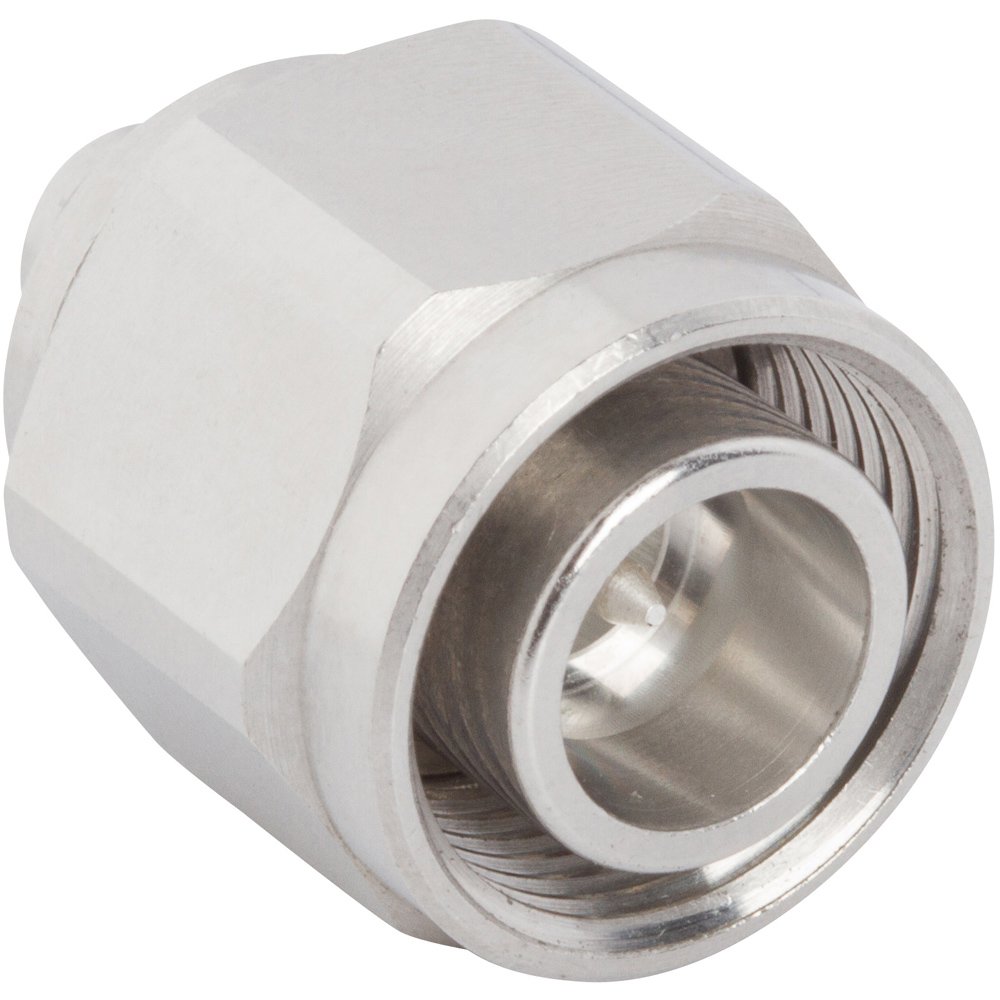
Amphenol RF’s 2.2‑5 adapters address the need for smaller-form, high-performance RF interconnects in telecom, broadcast, and wireless systems. Designed in both in-series and between-series configurations, these adapters support critical transitions between 2.2‑5 and popular interfaces like N-Type, 4.3‑10, and 7‑16. Precision-machined to preserve signal integrity, they are ideal for dense RF panel designs and modular equipment.
Every adapter is crafted from rugged materials and engineered to meet Amphenol RF’s high testing standards. Expect tight VSWR, strong electrical continuity, and mechanical resilience across all offerings. Whether you're setting up base station racks, broadcast panels, or telecom nodes, our 2.2‑5 adapters ensure consistent connector compatibility and signal performance up to 20 GHz where applicable.
Features and Benefits
- Space‑saving Design – 53% smaller than 4.3‑10 adapters for more compact RF layouts.
- Seamless Compatibility – In-series and between-series versions supporting N-Type, 4.3‑10, and 7‑16 conversions.
- High‑frequency Performance – Ideal for systems up to 6 GHz, with many adapters suitable up to 20 GHz based on connected connector series.
- Robust Construction – Precision-plated bodies with PTFE dielectric ensure durability and electrical fidelity.
- Push-Pull or Threaded Coupling – Secure couplings for blind-mate scenarios and vibration-resistant applications.
Applications
- Small Cell & Distributed Antenna Systems (DAS) – Dense RF panel assemblies with compact connectors.
- Telecom Base Stations – Precision conversions between 2.2‑5 and larger interfaces like N-Type and 7‑16.
- Broadcast & Microwave Links – High-performance paths in limited-space RF hubs.
- Test & Measurement – Connector saver functionality in lab environments.
- High-density OEM & Infrastructure – Ruggedized adapters for 5G, microwave, and advanced RF equipment.
All 2.2-5 Adapter Categories
Related Resources
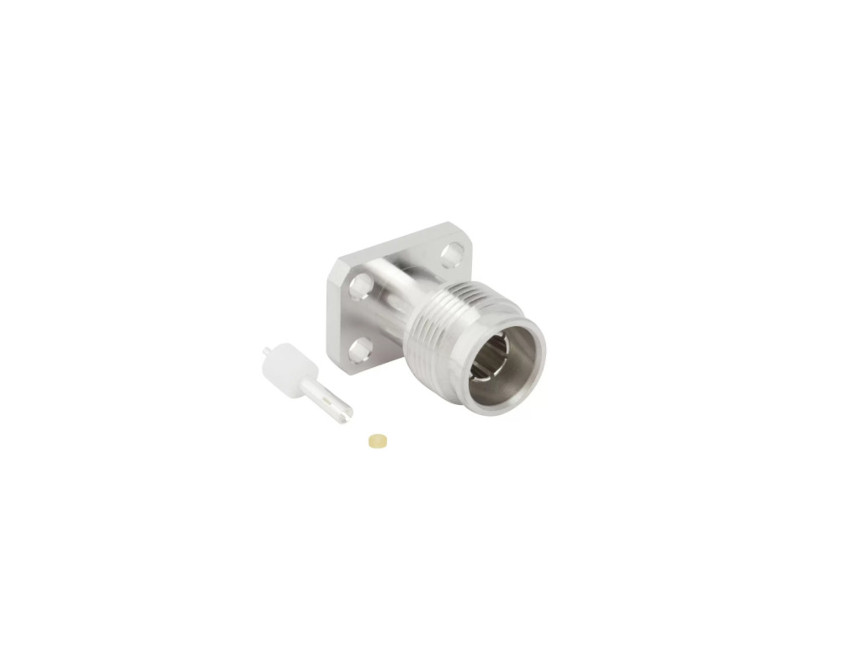
Give 5G wireless technology a boost with new 2.2-5 connectors
Amphenol RF is pleased to introduce the expansion of our 2.2-5 product series. This expansion includes new plug and jack cable mount configurations designed for 0.141” conformable, RG-402, Times Tflex 402 and Belden 1673A semi-rigid cable.
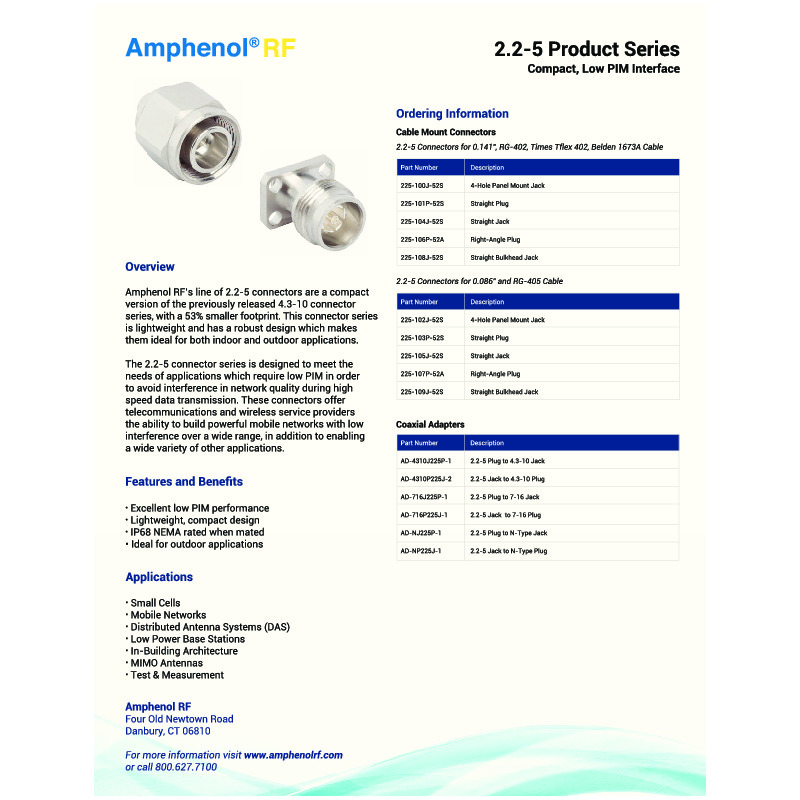
2.2-5 Connector Series
The Amphenol RF 2.2-5 Product Data Sheet highlights the 2.2-5 connector series, designed for high-performance RF applications requiring compact size, low PIM, and superior electrical performance. This connector series is engineered to support high-frequency, low-loss signal transmission, making it ideal for 5G networks, small cells, and distributed antenna systems (DAS). With a rugged, weatherproof design, these connectors ensure reliable performance in harsh environments while maintaining ease of installation through various coupling mechanisms, including threaded, push-pull, and hand-screw options.
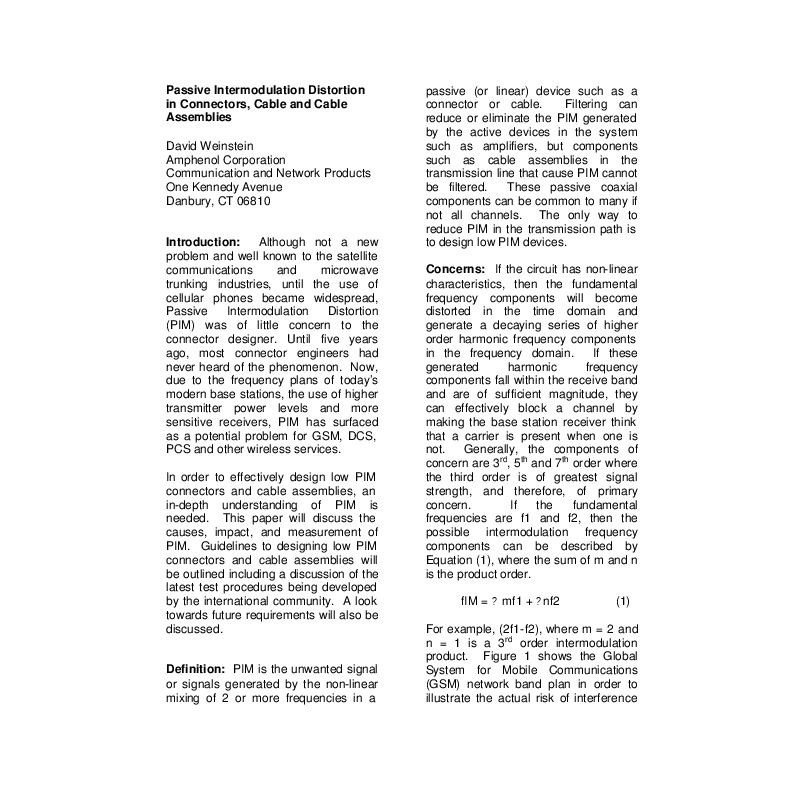
White Paper: Passive Intermodulation Distortion
The document "Passive Intermodulation Distortion in Connectors, Cable and Cable Assemblies" by David Weinstein of Amphenol Corporation discusses the causes, impacts, and measurement of Passive Intermodulation Distortion (PIM) in RF components. It explains how PIM is generated by non-linear mixing in passive devices like connectors and cables, causing unwanted signals that can interfere with communication systems. The paper outlines design guidelines to minimize PIM, including contact design, material choices and cleanliness, and describes testing methods to ensure low PIM performance.
Send us a Message
Please fill in the form below and we will contact you very soon.
Fields marked with an asterisk (*) are required.