
4.1-9.5 Right Angle Clamp Plug 1/2-inch Helical Corrugated 50 Ohm
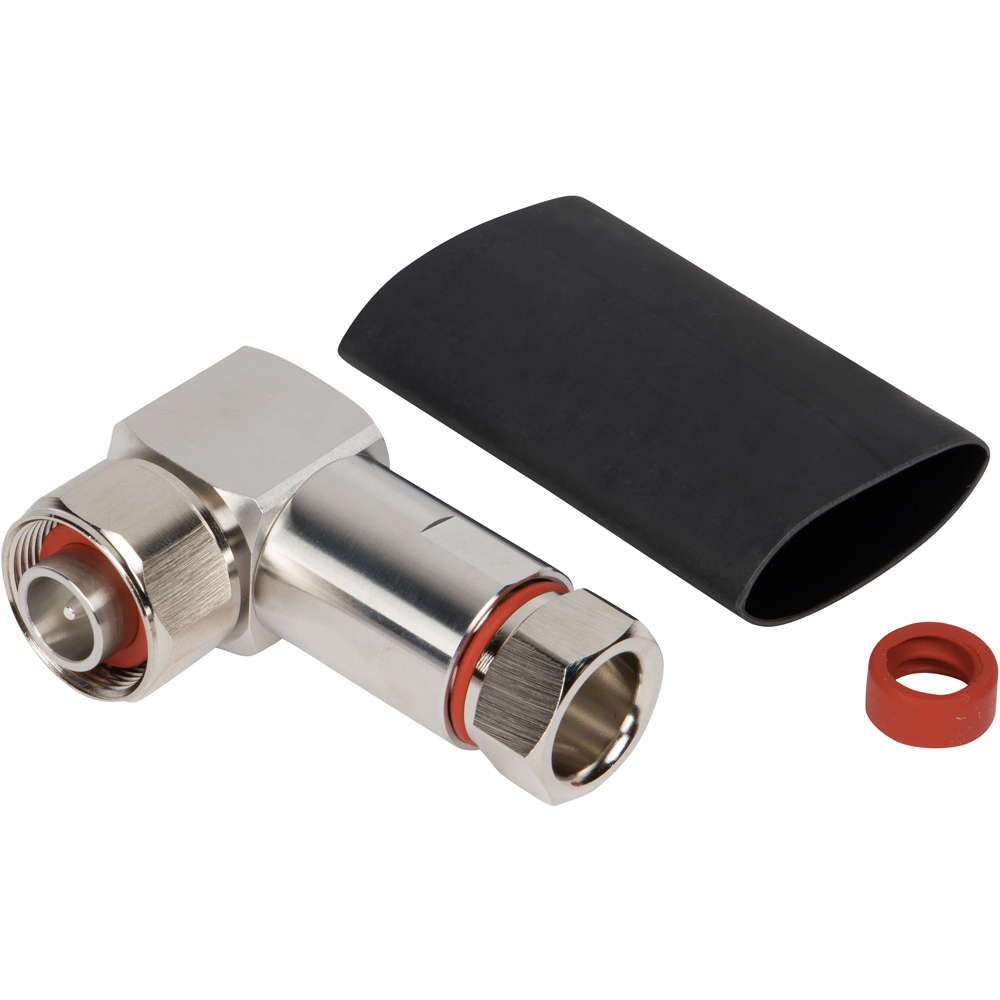
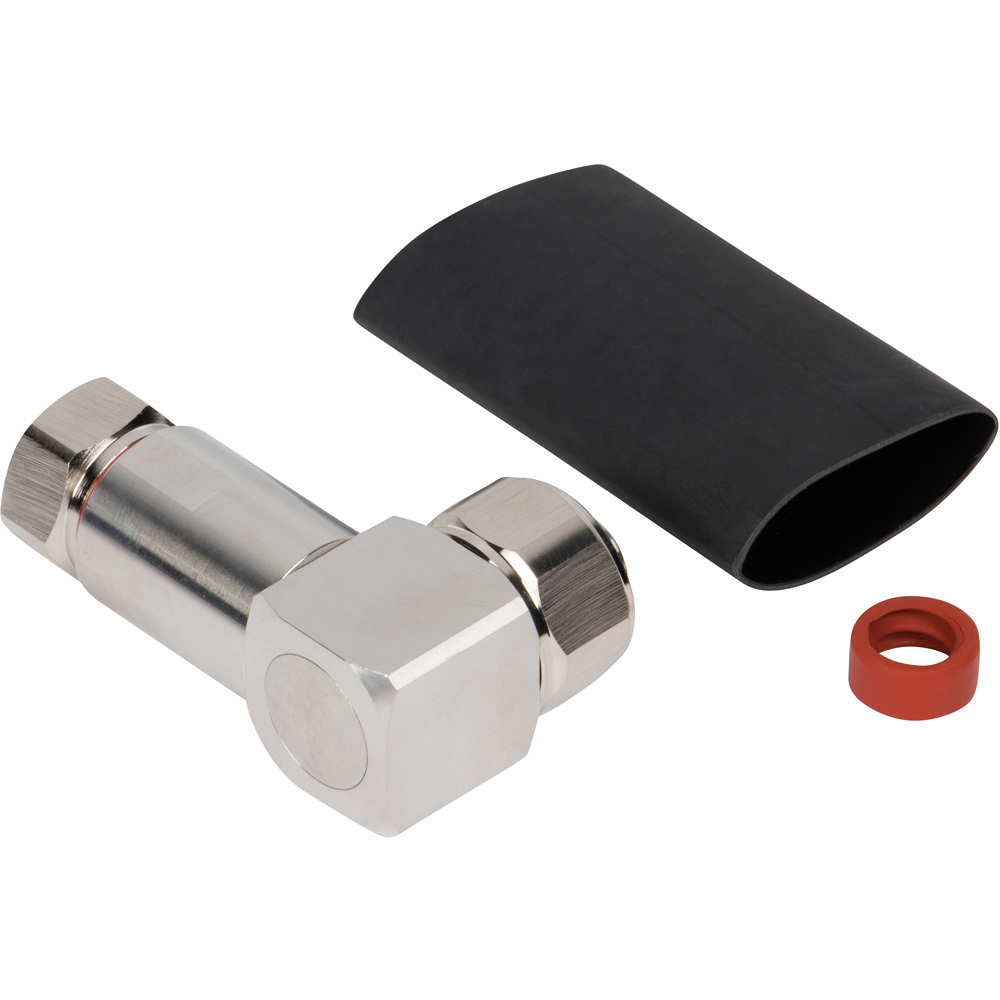
332113
Part Status:
Active
Product Specifications
See Similar
Product Specifications
| Attributes | Details |
See Similar
Select the attributes below to view similar products
|
|---|---|---|
| Applications |
Low-PIM
|
|
| Body Finish |
White Bronze
|
|
| Body Material |
Brass
|
|
| Cable Type (Terminates To) |
1/2-inch Helical Corrugated
|
|
| Contact Finish |
Silver
|
|
| Contact Material |
Beryllium Copper
|
|
| Contact Termination |
Press-Fit
|
|
| Country of Origin |
CN
|
|
| Coupling Mechanism |
Threaded
|
|
| ECCN |
EAR99
|
|
| Frequency (Max GHz) |
3
|
|
| Gender |
Plug
|
|
| HTS Code |
8536.69.4010
|
|
| Impedance (Ohms) |
50
|
|
| Insulator Material |
PTFE
|
|
| IP Rating |
Not Rated
|
|
| Isolated |
No
|
|
| Low PIM |
Yes
|
|
| Mating Cycles (Min) |
500
|
|
| Mil Qualified |
Not Mil Qualified
|
|
| Non Magnetic |
Contains Magnetic Materials
|
|
| Orientation |
Right Angle
|
|
| Panel Mounting Feature |
Not Applicable
|
|
| PFAS |
Contains PFAS
|
|
| Ports |
1 (Single Port)
|
|
| Size Category |
Large
|
|
| Temp (Max Degrees Celsius) |
165
|
|
| Temp (Min Degrees Celsius) |
-65
|
|
| Termination Style |
Cable - Clamp
|
|
| Thread Direction |
Standard
|
|
| Unit Weight (Grams) |
0
|
|
All Related Documents
All Related Documents
| Document Title | Type | Publish Date |
|---|---|---|
| 332113 PDF Customer Drawing (Size: 155.9 KB) | pdf |
3/31/2026 |
Related Resources
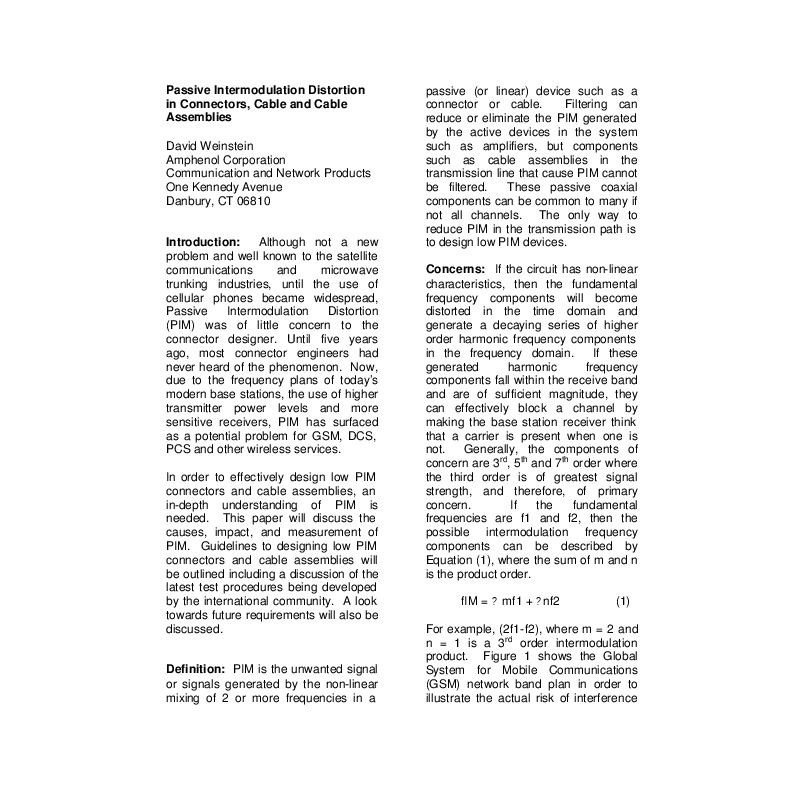
White Paper: Passive Intermodulation Distortion
The document "Passive Intermodulation Distortion in Connectors, Cable and Cable Assemblies" by David Weinstein of Amphenol Corporation discusses the causes, impacts, and measurement of Passive Intermodulation Distortion (PIM) in RF components. It explains how PIM is generated by non-linear mixing in passive devices like connectors and cables, causing unwanted signals that can interfere with communication systems. The paper outlines design guidelines to minimize PIM, including contact design, material choices and cleanliness, and describes testing methods to ensure low PIM performance.
Send us a Message
Please fill in the form below and we will contact you very soon.
Fields marked with an asterisk (*) are required.